
Source evidence
- Employment
- Education
- Projects
- Skills
- Credentials
Profile & baseline
Your resume contains evidence about where you've been. CareerGauge turns that evidence into a structured baseline that can inform opportunity analysis, career diagnostics, and the decisions that follow.
From resume to baseline
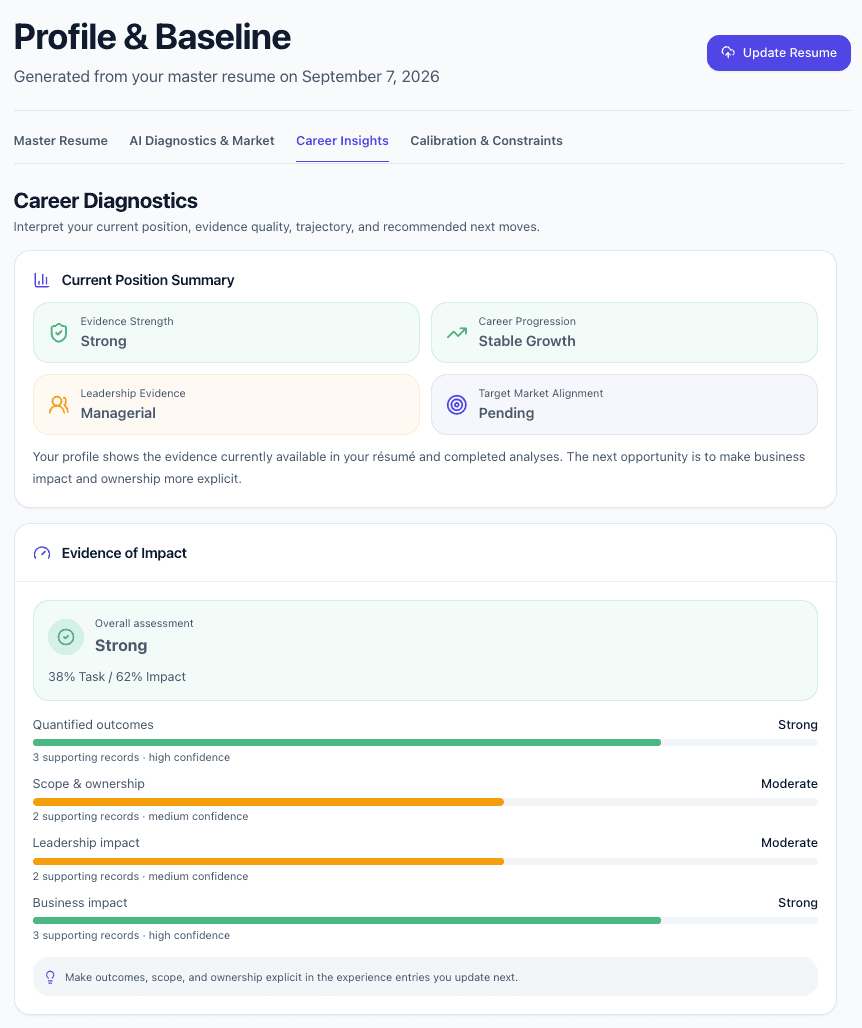
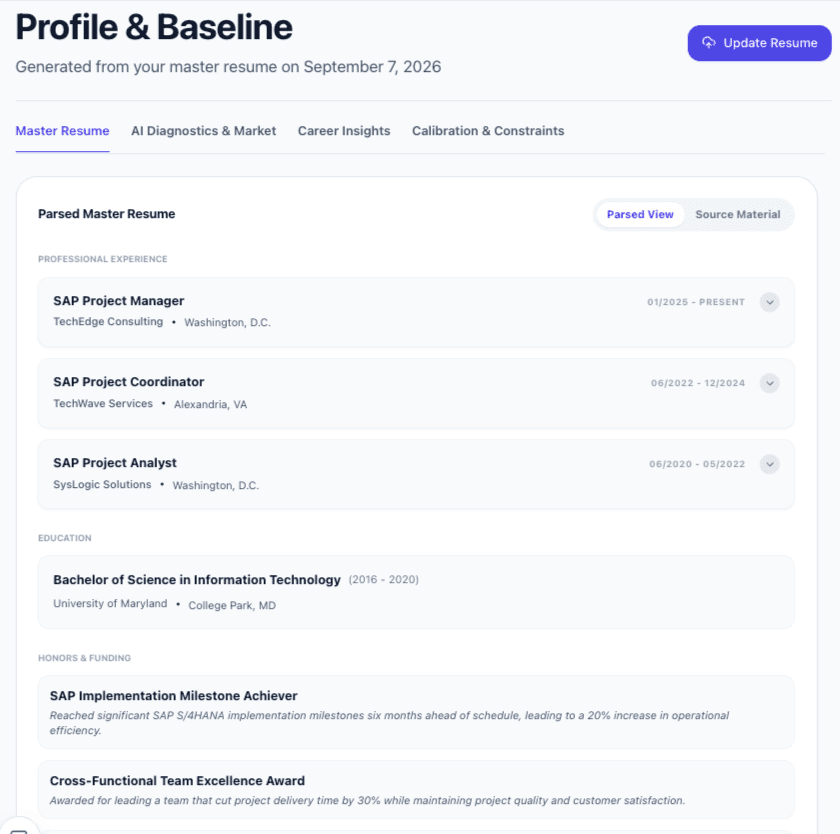
CareerGauge preserves the structured facts extracted from your resume—employment, education, projects, skills, credentials, and other professional evidence.
We keep your source evidence separate from CareerGauge's interpretation, so you can always see what came from your resume and what was inferred.
See how it worksA clearer picture
Your resume provides the facts. CareerGauge applies those facts to identify patterns, signals, and possibilities. Both are important, and we keep them clearly distinct.
Capability overview
CareerGauge identifies the capabilities you've demonstrated through your experience, with evidence based on your resume and professional history.
Audit your resume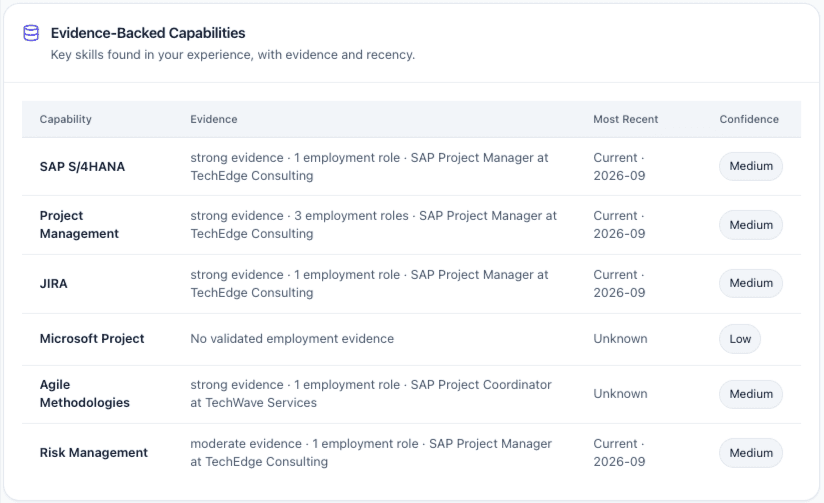
Adjacent opportunities
Based on your professional baseline, CareerGauge identifies realistic adjacent opportunities, from roles you're ready for now to longer-term possibilities.
Ready now
Builds on demonstrated frontend leadership and current technical evidence.
Review the available evidence and make the missing context explicit.
Needs upskilling
A plausible next step with additional people-leadership and delivery evidence.
Review the available evidence and make the missing context explicit.
Stretch goal
Extends a strong technical foundation into broader systems ownership.
Review the available evidence and make the missing context explicit.
Context & preferences
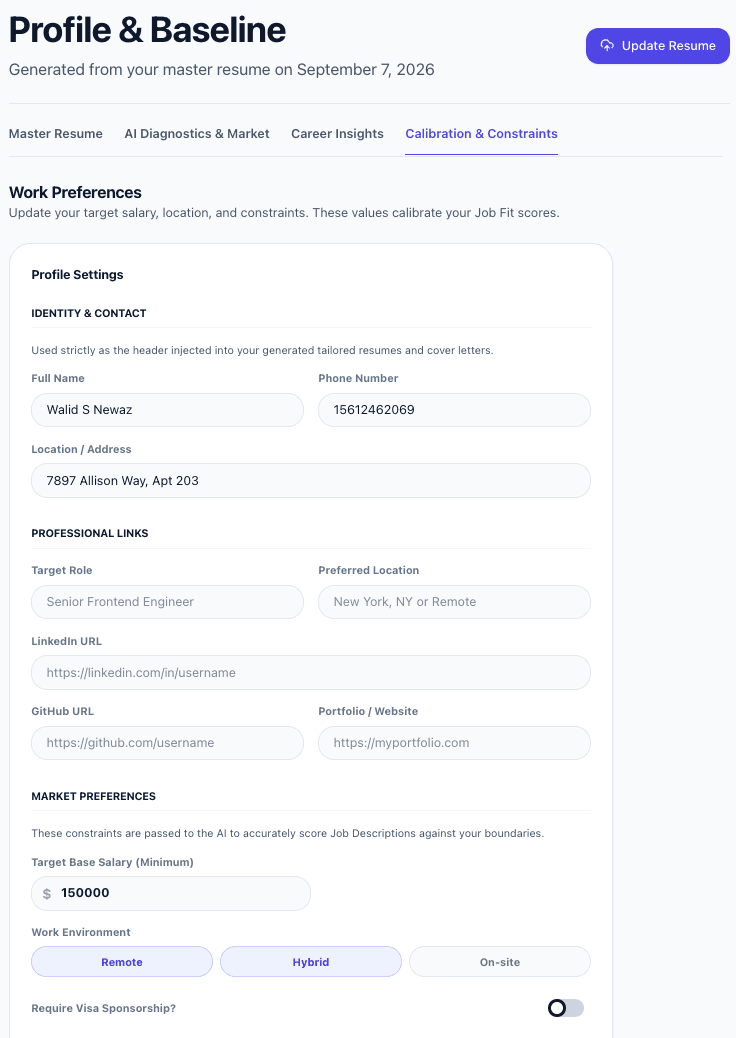
Career decisions depend on context. CareerGauge can use your preferences and constraints alongside your professional evidence—without presenting inferred preferences as facts.
A continuous advantage
The same professional context can inform decisions throughout the job-search lifecycle rather than being recreated for every job.
Build your career baseline
Analyze the opportunity
Pursue, hold, or close
Build the application packet
Track interviews and follow-up
Preserve outcomes and history
Start by reviewing the evidence in your resume, or evaluate a real opportunity against it.